Why Non-Adoptees Should Read Wonderland: Memoir of a Black Market Adoption
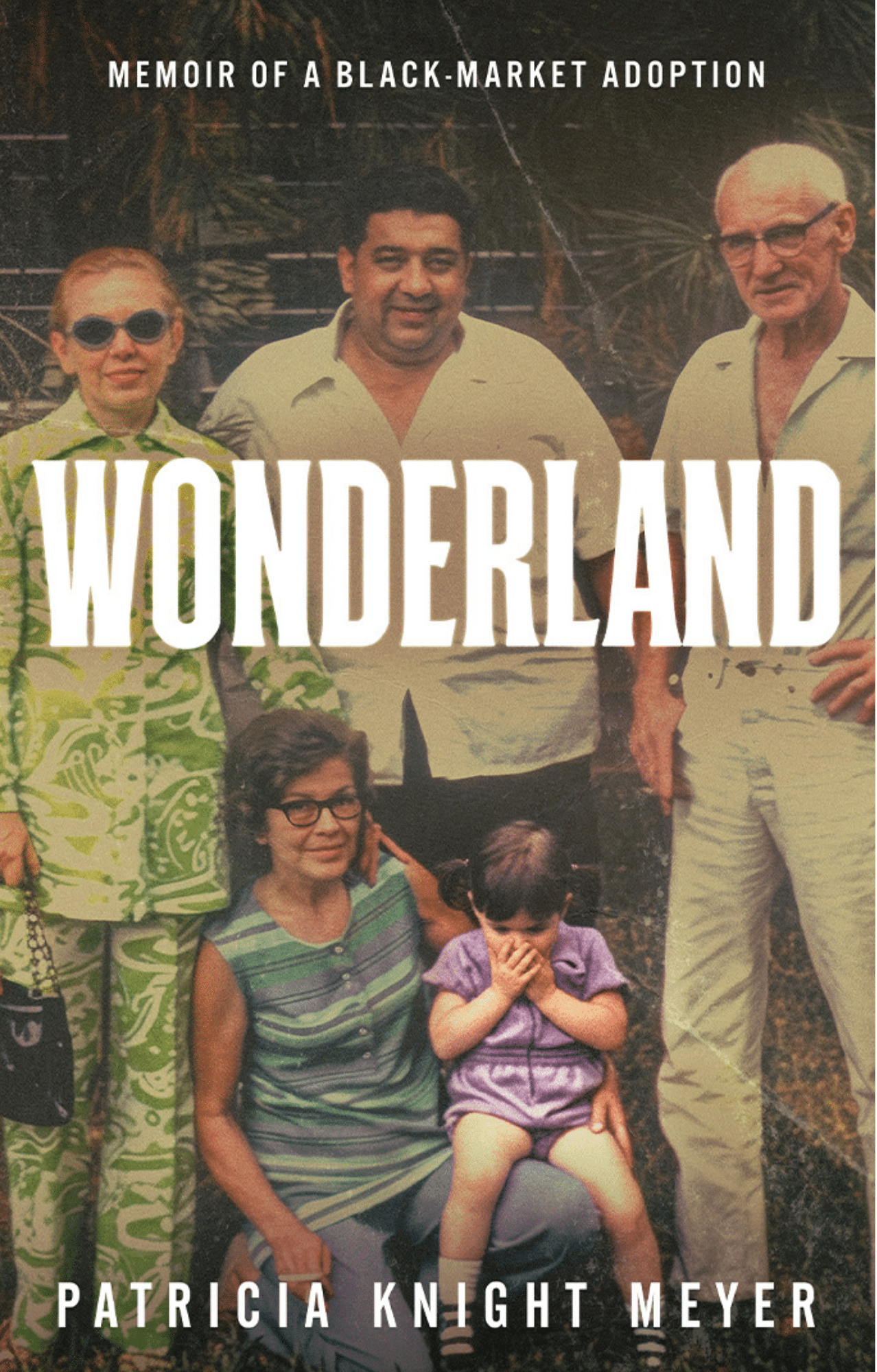 Most people who were not adopted assume adoption is a tidy solution to a difficult problem: a child finds a family, a couple finds a child, and everyone moves on. Patricia Knight Meyer’s Wonderland: Memoir of a Black-Market Adoption dismantles that assumption with quiet force. The book is not only for adoptees. It is for anyone who has ever believed a family story was complete, or who has never had to question the basic facts of their own existence.
Meyer was handed over as a newborn on a Houston hospital curb in 1970—no agency, no judge, no paperwork. Her adoptive parents, a biracial couple navigating a discriminatory system, later faced blackmail from the attorney who arranged the placement. She grew up celebrating a made-up birthday, haunted by nightmares, and caring for an alcoholic mother and a severely disabled father, all while sensing that something essential about her life remained unspoken. When she finally obtained a legal birth certificate at age 47 and located both birth parents, the truth proved more complicated and painful than the fairy tale she had been told.
For non-adoptees, the value of this memoir lies in how clearly it shows the human cost of secrecy. Adoption is often presented as a private family matter, yet Meyer’s story reveals the larger machinery behind it: the Baby Scoop Era’s pressure on unmarried mothers, the market forces that treated infants as commodities, and the legal gaps that left children without documentation. These are not abstract historical footnotes. They shaped real childhoods, real marriages, and real identities. Reading Wonderland makes visible the ways institutions can erase people while claiming to help them.
The book also offers something more personal. Everyone, adopted or not, inherits stories about who they are and where they come from. Most of us accept those stories without scrutiny. Meyer could not. Her decades-long search forces the reader to consider what it means when the official version of a life is incomplete or deliberately false. That question extends beyond adoption. It touches any family that has rewritten its history, any person who has sensed a gap between the story they were given and the life they actually lived.
Wonderland does not argue that adoption is inherently wrong. It argues that the truth matters, and that children deserve more than a carefully managed narrative. Non-adoptees who read it will leave with a sharper understanding of why so many adoptees continue to push for open records, honest histories, and the simple right to know their own origins. That is not a niche concern. It is a question about how we treat the people whose lives begin outside the official story.