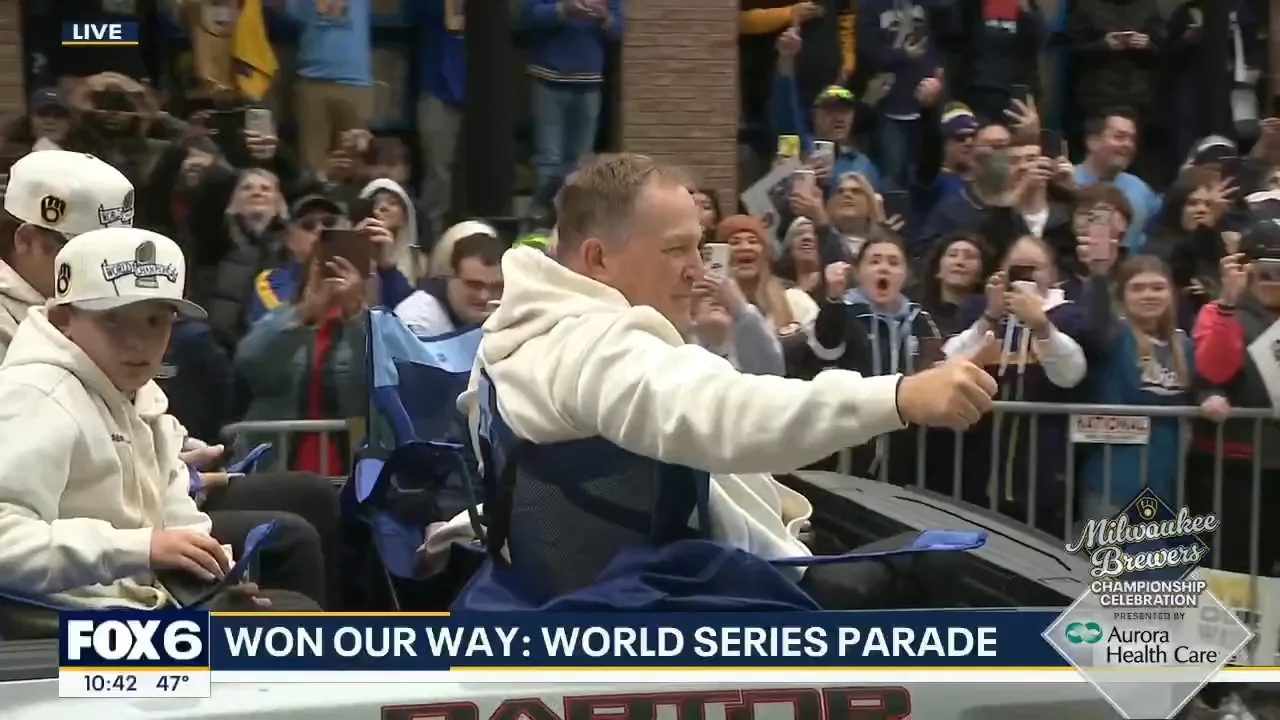
Pat Murphy rode through the Milwaukee streets in the back of a pickup truck with his sons, a folding chair under him and a World Series trophy somewhere nearby. No float. No open bar. No performance. Just a man who has managed baseball for decades, raised four kids, and chosen, since 1984, not to drink.
That choice still stands out in a culture that treats alcohol as the default language of celebration, belonging, and even grief. Championship parades, locker rooms, after-work hours, family holidays, and random Tuesdays are all routinely framed around drinking. Opting out can feel like opting out of the moment itself. For anyone who has decided they cannot, or will not, drink—whether because of a personal history, family losses, health, or simple clarity—the social script can feel relentless.
Murphy has been open about the reasons behind his decision. He has described watching alcoholism kill his father and others close to him, including former pitcher Bobby Welch. He has said that when he drank, he was not a good person. He has noted that drinking is everywhere in baseball, and that he cannot do it. Those are not abstract principles. They are the accumulated weight of watching people disappear and deciding the pattern would stop with him. The fact that he has sustained that decision for more than forty years while living inside one of the most alcohol-saturated professional environments is quieter than most headlines, but it is not small.
None of this requires treating Murphy as a role model in every sense. He has spoken candidly about three marriages that ended, about raising children through different chapters of his life, and about the ongoing work of managing his own mind. What remains visible is the consistency of one boundary: he does not drink. In a world that often equates toughness with the ability to keep going while consuming, that boundary is a different kind of toughness. It is the decision to remain present for the people who need him, without the substance that once distorted his judgment.
For people who feel the same pressure, the isolation is real. Friends and colleagues may not understand why a beer at the parade, or a toast at the office party, or a night out after a hard week feels impossible rather than optional. The assumption that “everyone” drinks can make a simple ‘no’ sound like judgment or distance. It is neither. It is often the result of having already calculated the cost and deciding the cost is too high. That calculation does not make someone less social, less celebratory, or less capable of marking a big moment. It simply means the marking happens differently—through the people who are there, through the work that was done, through the ordinary act of staying clear-headed enough to remember it the next day.
Murphy’s parade image is useful precisely because it is ordinary. He was not delivering a speech about sobriety. He was sitting with his sons in a truck while the city celebrated around him. The choice not to drink did not prevent him from participating in the achievement or from being present with his family. It shaped the form of that presence. For anyone navigating similar terrain, that is worth noticing. You can still show up. You can still claim the moment. You do not have to accept the cultural premise that the moment requires alcohol to count.
Societies that center alcohol make it easy to feel like the outsider for refusing the center. The quieter truth is that the refusal is often the more demanding path, and the one that leaves more of a person available for the people and work that matter. Murphy’s long record of not drinking has not made him less of a manager or less of a father. It has simply been one of the conditions under which he has done both. That is not a prescription. It is evidence that the condition is livable, even inside a culture that keeps insisting otherwise.